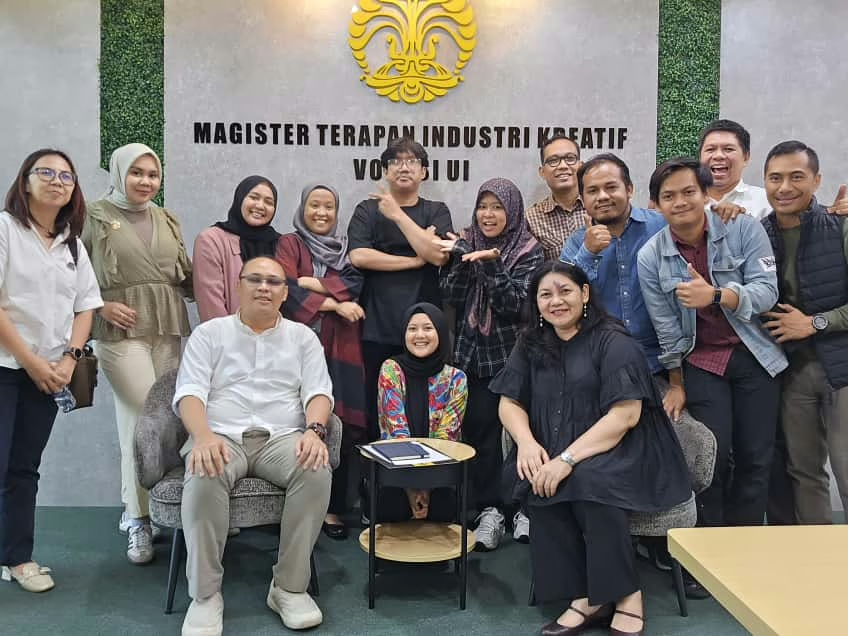
Depok-The Master of Applied Creative Industries study program, Vocational Education Program, Universitas Indonesia (UI), held a guest lecture entitled “Local Wisdom Amidst Digital Innovation and Creativity: A Case Study of the West Java Creative Economy” on November 5, 2025. This activity featured Rispiaga, S.T., M.T., Head of the Tourism Industry Division of the West Java Provincial Tourism and Culture Office, as a speaker.
The lecture, held in the Applied Creative Industries Masters Room, is part of the Creative Industries Selected Chapters course. Through this activity, students are expected to deepen their understanding of the application of research in developing creative industries based on local wisdom and to produce innovative work relevant to the needs of the national creative industry sector.
In his presentation, Rispiaga outlined how local wisdom is a strategic resource for the growth of West Java’s creative economy. According to data from the West Java Provincial Tourism and Culture Office, the creative industry sector in the region continues to make a significant contribution to the regional economy, with investment reaching Rp14.3 trillion and employment of over 39,000 people by the third quarter of 2025.
“The growth of the creative industry in West Java is not only supported by individual creativity, but also by cultural values passed down from generation to generation. This local wisdom forms the DNA of creative products that are globally competitive,” said Rispiaga.
Rispiaga explained that West Java has 17 creative economy subsectors, including fashion, crafts, culinary arts, visual communication design, performing arts, applications, digital games, and others. According to him, the crafts, culinary arts, and fashion subsectors are the largest contributors to investment and employment. Furthermore, the potential of digital subsectors such as games and applications is also growing rapidly along with increasing technology adoption. Rispiaga added, “Digital transformation in the creative ecosystem must not abandon cultural roots. Instead, technology must be utilized to strengthen local character, expand market reach, and protect intellectual property.”
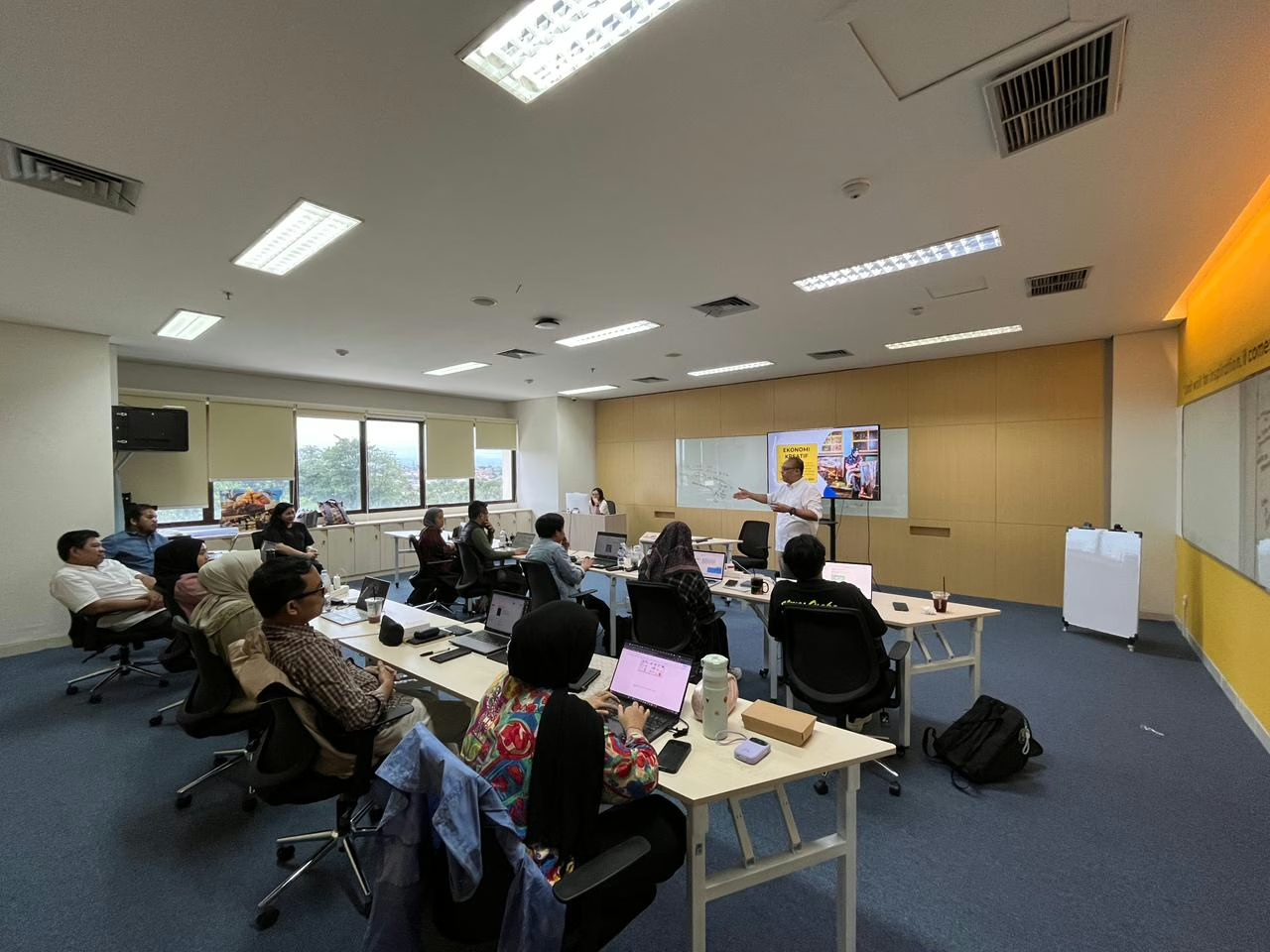 (Photo: Atmosphere of a guest lecturer’s lecture in the Creative Industry Applied Masters program)
Furthermore, Rispiaga also highlighted West Java’s success in developing an inclusive creative ecosystem through a hexahelix collaborative approach between the government, academics, businesses, communities, media, and the public. This collaboration is realized through the establishment of Creative Centers in various regencies/cities such as Bandung, Bogor, Subang, Sumedang, and Depok, which serve as shared spaces for training, research, and incubation of creative works.
The Head of the Creative Industries Applied Master’s Program, Dr. Dewi Kartika Sari, S.E., M.S.Ak., CA., explained that this guest lecture is an important part of strengthening students’ learning experiences through real-world practice and understanding the industrial context. “We want students to understand that creativity is connected to cultural values and societal needs. From this, they can develop impactful applied research and produce works with both economic and social value,” said Ika.
One of the students, Hasbi Hasbullah Atmaja, also shared his positive impressions after attending the lecture. “Mr. Rispiaga’s material made me realize that local wisdom is a source of unique ideas. I have a better understanding of how research and technology can be used to strengthen cultural identity in creative products,” he said.
This activity also contributes to several Sustainable Development Goals (SDGs), such as SDG 8 (Decent Work and Economic Growth) by strengthening the capacity of creative human resources and creating new jobs in the creative economy sector, as well as SDG 11 (Sustainable Cities and Communities) through preserving local wisdom as the foundation of socio-cultural identity and sustainability.