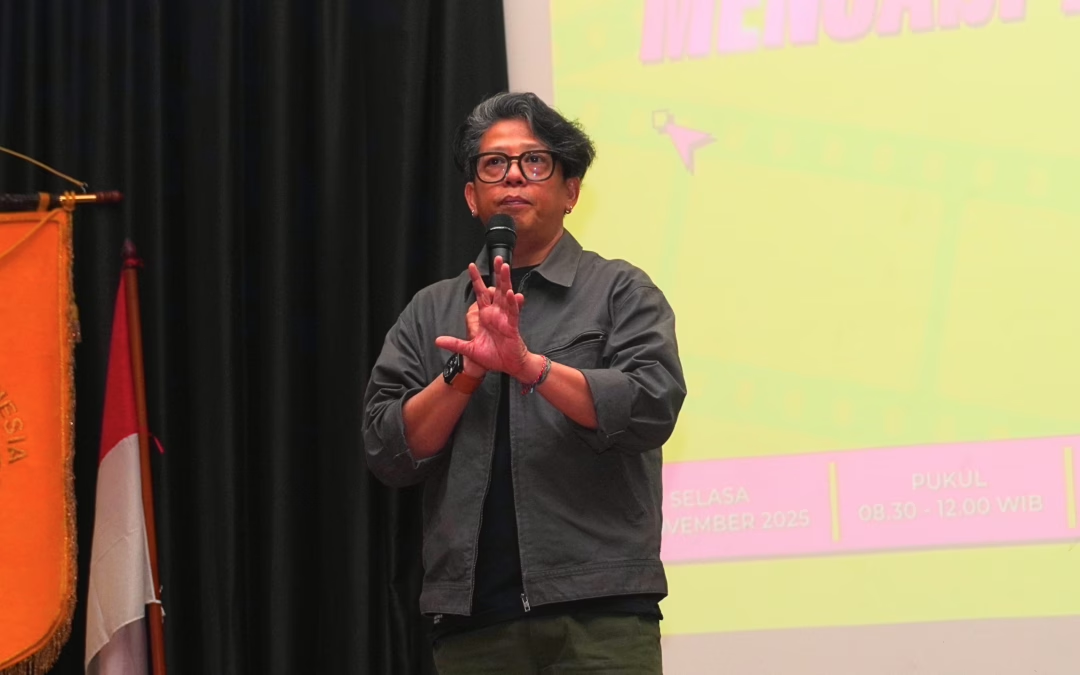
Depok-The Vocast Talks public lecture, organized by Sinephoria, a student group in the Multimedia Broadcasting study program, Vocational Education Program, Universitas Indonesia (UI), presented an inspirational session for students. This public lecture featured professional film
This public lecture presented an in-depth discussion of the editing process, encompassing the technical aspects of cutting images as well as the art of building narrative, emotion, and a vibrant visual rhythm. Cesa began his presentation by emphasizing the importance of storytelling as the foundation of any audiovisual work. “The key to creating any work is storytelling. Without storytelling, a film will be lifeless and unable to communicate,” he said. He explained that editors must be able to read emotions, understand events, and choose the best moments from each frame.
 (Photo: Cesa explains that stories act as the foundation in an audiovisual work)
Cesa also emphasized that the process of selecting, arranging, and editing footage is similar to cooking or designing clothes, namely transforming ingredients into flavors and rhythms that engage the audience. The three main foundations of editing, he said, are emotion to shape the flavors that suit the needs of the story; story to ensure a logical flow and effective information delivery; and rhythm, which determines the flow of the film and how the audience engages with the narrative.
Furthermore, Cesa also emphasized the importance of continuity and a close relationship between editor and director. Cesa said, “We have to share ideas, experiences, references, and even moods. From there, a feeling emerges that shapes the film’s style. When an editor cuts a scene incorrectly, the story and feeling that have been built can be lost. Therefore, precision and accuracy are needed in absorbing the film’s message.”
Some things an editor needs to do before editing include understanding the story and the message they want to convey through research, observation, and reference work. Equally important, editors must also be aware of current social situations and trends. For example, this can be done by watching the latest films and actively exploring social media.
 (Photo: Group photo after the Vocast Talks activity ended)
Cesa explained that film is a recreation of life, meaning that every element, such as music, lighting, cutting, and so on, serves to subtly construct memories and feelings within the audience. “Film is life, curated and made more dramatic, profound, and emotional,” Cesa concluded.
Teresia, one of the students attending the public lecture, shared her impressions after gaining an understanding of the world of film. She said, “Mr. Cesa’s presentation demonstrated that
The Head of the Multimedia Broadcasting Study Program, Peny Meliaty Hutabarat, S.Sos., M.S.M., said that this public lecture invites students to understand that editing is the art of storytelling that combines logic and emotion. “We are bringing in industry practitioners so that students can learn directly from them. Editing is a creative process that trains sensitivity, precision, and storytelling skills. Hopefully, this Vocast Talks can become an important space for students to understand the world of the film industry and foster the courage to experiment in their work,” concluded Peny.